THE PROBLEM / GOAL
The Problem
A customer profile often overlooked: individuals with little to no credit history, or a damaged one.
They need a chance to rebuild or start fresh, yet no one offers them that opportunity. As a result,
they struggle endlessly to find a lender willing to approve financing for their car.
The Goal
From the customer side, the goal was to provide accessible auto financing that helps individuals with
little or no credit history not only acquire a vehicle but also rebuild their financial standing.
From the business side, the challenge was to create a new brand while still part of Tricolor that
carried its own identity, differentiated enough to inspire trust, represent speed and simplicity in its
process, and resonate with a different customer profile.
RESEARCH
We conducted research on the customer flow used by competitors who targeted a similar client profile.
This allowed us to understand existing approaches and identify key gaps in their processes. At the same
time, we partnered with CarGurus, who supported us by directing qualified leads from our target audience.
USER PERSONA
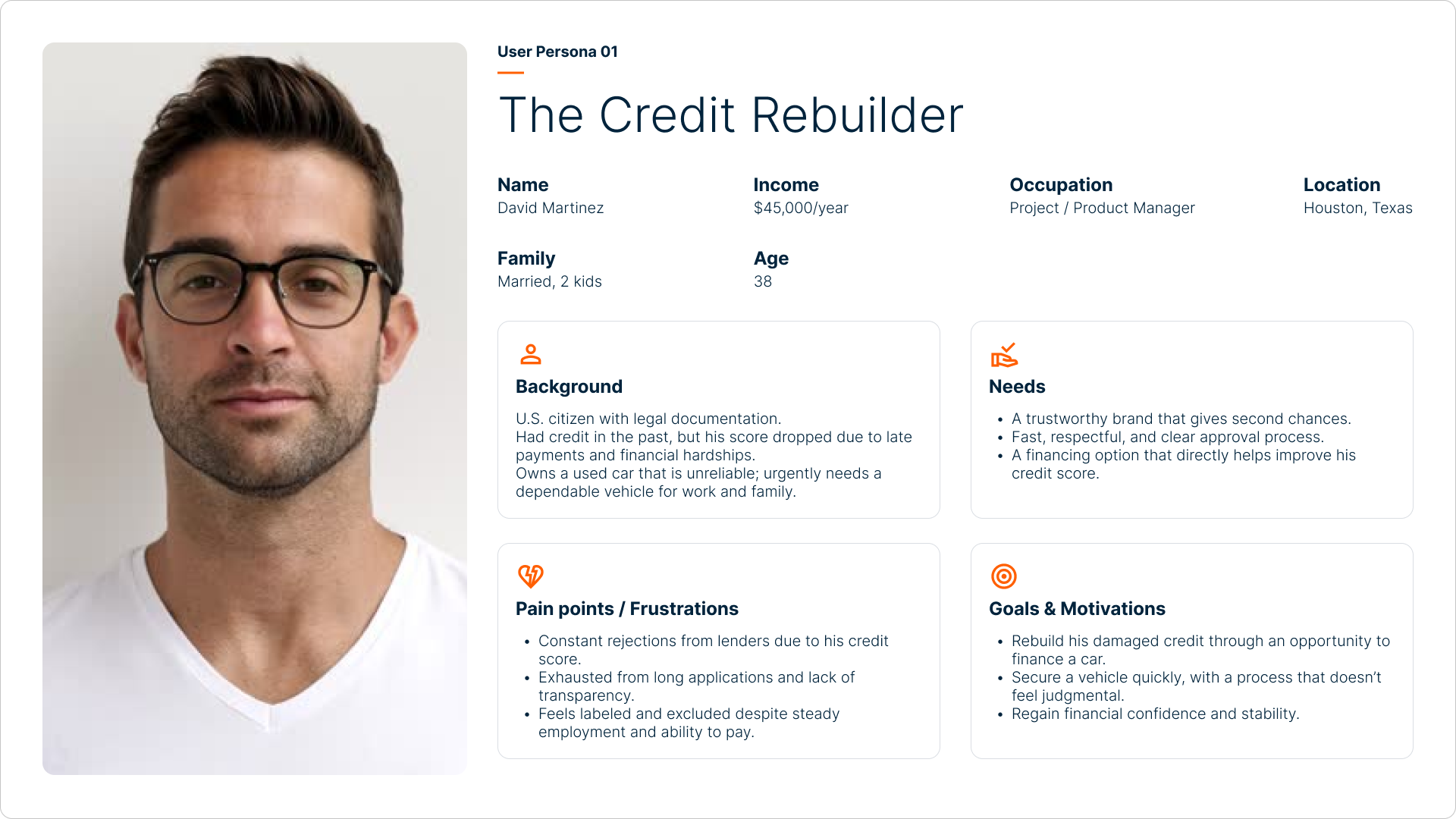
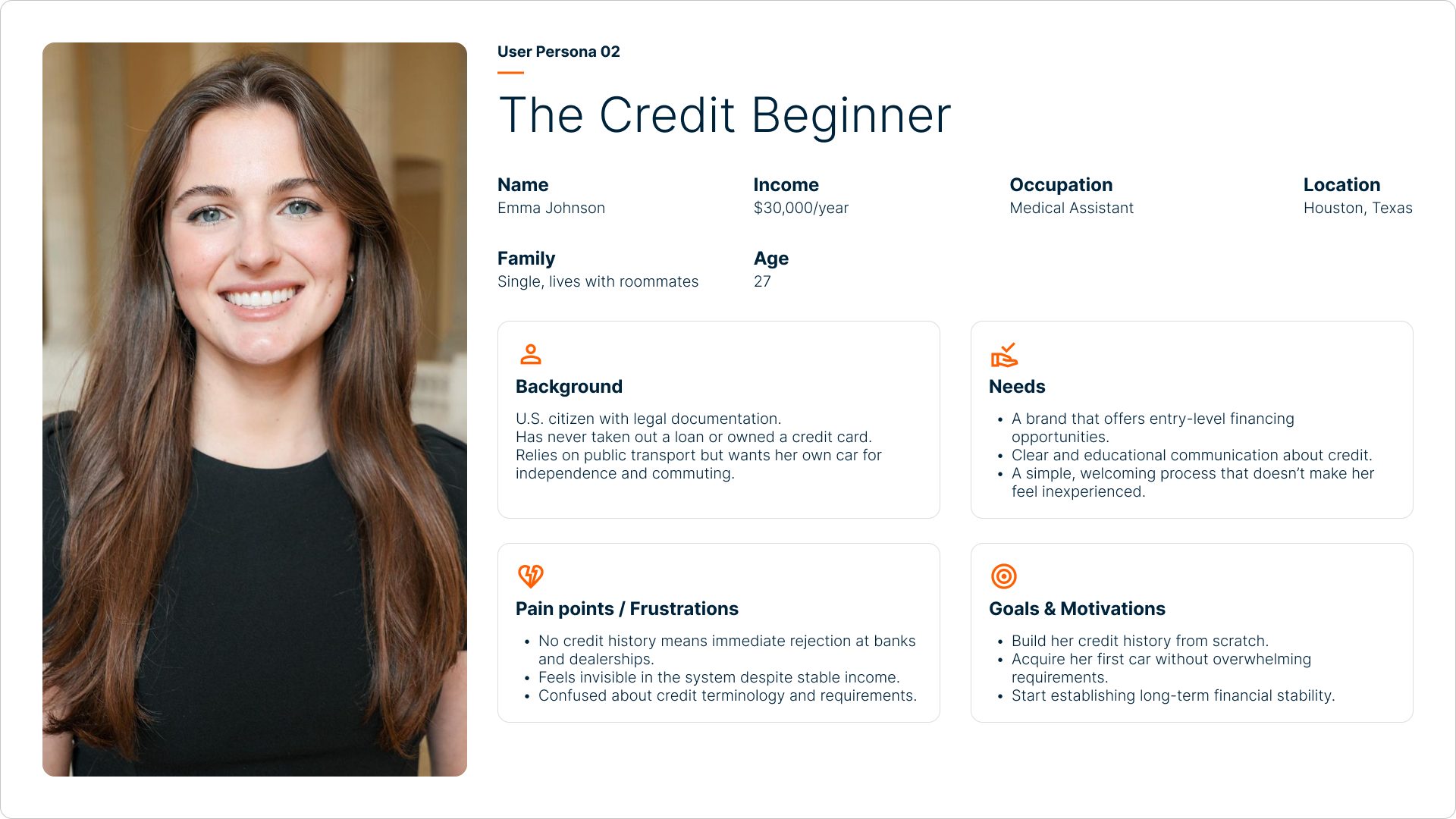
For Upwards (Tricolor) we defined two primary personas to address the most critical financing scenarios:
- Credit Beginner — No credit history. Needs a first approval with simple requirements.
- Credit Rebuilder — Past delinquencies leading to a low score. Needs a fair path to rebuild credit.
Both personas share the same core need: they need auto financing, but someone has to approve them.
FLOW TO RESOLUTION
After conducting research, analyzing competitor journeys, and aligning with stakeholders, I created the
main user flow to serve as the foundation for design. We chose to integrate FastLane in order to provide
a quick pre-approval while requesting the minimum amount of user data possible.
To streamline the experience, the user’s first step was designed around a clear CTA that immediately
moves the user toward pre-approval. Once approved, the system only displays vehicles that fit the user’s
credit profile and budget.
WIREFRAMING
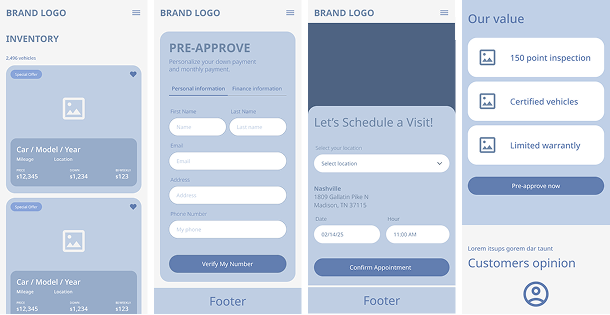
Before moving into visual design, we created a series of low-fidelity wireframes to explore the structure
of the flow and validate key interactions.
The goal was to focus on clarity, hierarchy, and efficiency, ensuring that each step minimized friction
for the user.
FINAL DESIGN
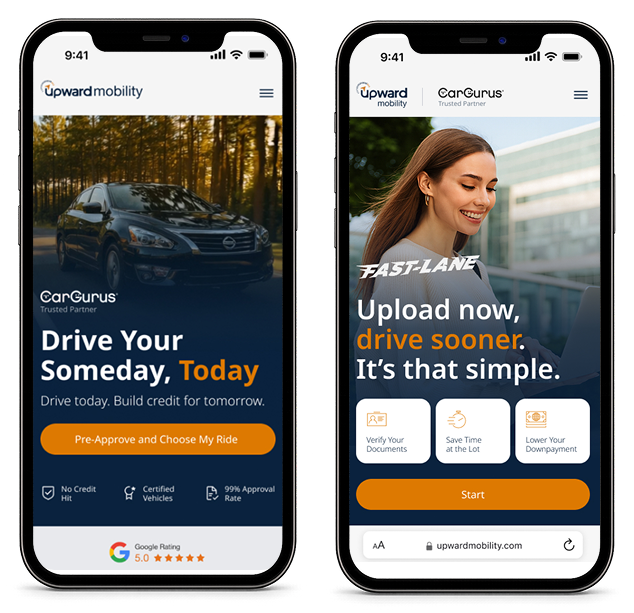
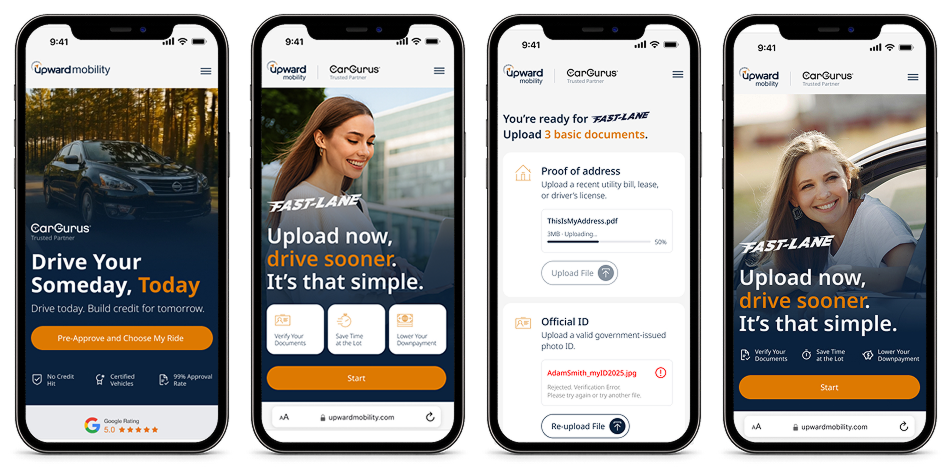
The final design brings the flow to life with a clean and modern visual language. Every screen was
crafted to balance trust, speed, and simplicity, reflecting the needs of our target users who value quick
approvals and clear guidance.
The process followed a mobile-first approach, ensuring accessibility and clarity on smaller screens, where
most of our users interact. Once the mobile design was validated and approved, the solution was expanded
into a desktop version.
PROTOTYPE
A simple interactive prototype was created to present the flow and validate key decisions with
stakeholders. Beyond navigation, the prototype was enhanced with improved visual content to better
communicate the final impact.
IMPACT
The solution reduced user friction by streamlining the pre-approval process and minimizing data entry. By presenting only vehicles that fit each customer’s
credit profile, the experience saved time and built trust with users who were often exhausted by repeated rejections.
From a business perspective, the new brand and flow increased lead conversion rates, expanded Tricolor’s reach to a new customer segment, and strengthened
long-term loyalty by helping clients build or repair their credit history. The combination of FastLane integration, clear CTAs, and tailored inventory
delivered a measurable lift in approvals and a stronger emotional connection with the target audience.
LEARNING
Throughout this project, I learned the importance of truly understanding the emotional state of the user. Our target audience often arrives exhausted from
repeated rejections and long application processes, which made it clear that simplicity and empathy are as critical as functionality.
Another key takeaway was the value of collaborating closely with stakeholders early on, aligning business goals with user needs to create a solution that
serves both sides. Finally, the process reinforced the power of mobile-first design as a foundation, ensuring accessibility before scaling into more complex
desktop layouts.